Back to blog
Education
July 8, 2026
The Forgotten Trailblazers of the Faith
How Hymnody Affects Modern Worship
It all started with my dear friend who has dementia. She has very few memories besides my voice and these hymns. Despite her fading memory, the lyrics are as automatic as her every breath—a language she will never forget. Over the last few years, we’ve sung through the hymnal countless times, until one day we tried something new. I sang the hymn, then read an article about the author, then sang the song again. By the end, we were both in tears. We read about a man plagued with trials, yet filled with thanksgiving. The song was transformed, as if we had heard it for the first time. The story became the lens by which we could see, adding color and soul to a black-and-white page.
There is a rich inheritance buried in the lyrics of the Sunday hymnal. The classics such as ‘Amazing Grace’ or ‘God Moves in Mysterious Ways’ are a well-beaten path. However, frequently forgotten is the history of the trailblazers, the courageous individuals who first penned the lyrics to your favorite hymns. These men are responsible for the words that pound on Hell's gate every Sunday. But these trailblazers have more than just words to share. They each have a life that proclaims the goodness of their Maker.
These hymns and their authors are the sword of the saints. A sword that my friend with dementia not only wields, but desires others to know. The authors reframe their battles, translating personal trials into a shared proclamation of Christ’s victory. I wrote my thesis retelling just a few of their stories in the form of a kids book, complete with poems, heroes, and monsters, so that even the littlest saints may swing the sword of those that came before.
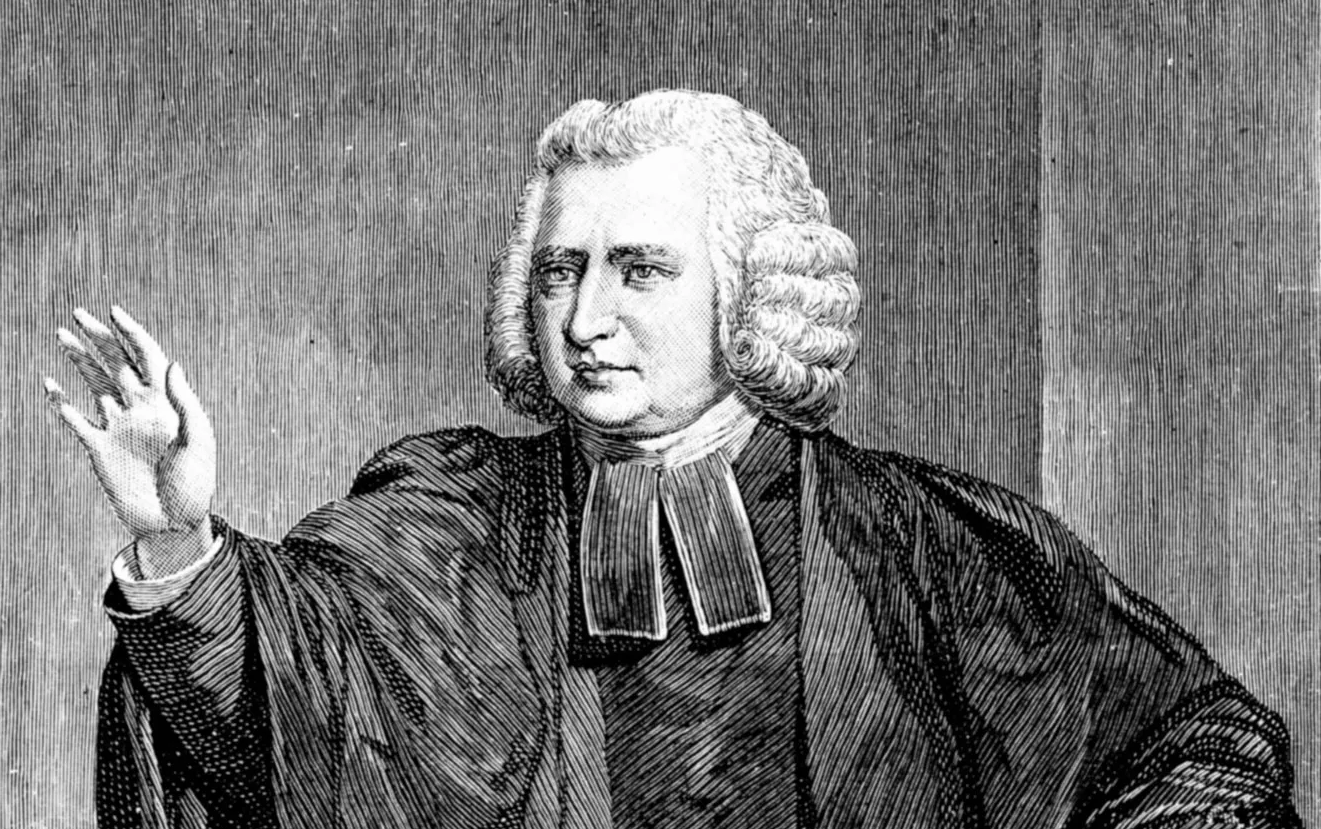
One such story is of Charles Wesley, one of the most profound writers of almost 6,500 hymns. Wesley converted to Christianity while travelling to America. During the trip, a dangerous storm came upon him and his brother. Charles awoke in a panic, unable to calm down.
Then, he heard a soothing melody cut through the chaos. Here is an excerpt from the poem I wrote from his perspective, specifically this moment on the ship.
Foreign words rang like magic pow’r
I listened close, their words devour’d…
The German travellers sang on deck,
Yes, through the storm, and through the wet.
Thanks be to God we did not wreck,
My life to Him, I owe a debt
By their music, I saw God’s face,
My faith established by his grace.
Then and there I tasted heav’n,
Never before was God so near.
Their music in my heart was leav’n
The Bread of Life to me was dear.
When Wesley returned to England, he became a determined messenger of the gospel, ministering to prisoners. He spent hours singing with them in the jailhouse and was known to jump on the back of execution carts to sing—staying with the prisoners until the very end. One of his most popular hymns, ‘And Can It Be,’ includes the famous line “My chains fell off, my heart was free, I rose, went forth, and followed thee.” This lyric is speculated to be inspired by all the prisoners he witnessed whose chains were broken by faith, right before their death. Having been converted to Christianity by music, Wesley shares the power of God not just in his life, but in every life.
Another forgotten story is the courage of Thomas Ken. Have you ever had to stand up to an authority? Tyrant? How about the King of England? Well, that is exactly what Ken did. He stood up to the most powerful man of his time. Orphaned at just ten years old, Thomas was known for his determined spirit. He carved his name into the school walls and frequently found himself the object of his teacher’s attention (and not the good kind.) Despite this, he studied at
Oxford and entered into ministry. Ken frequently preached to the King of England, who described his sermons as possessing ‘a sting.’
Below is a short poem from Ken’s perspective about his encounter with the King of England.
I joined the church as a pastor,
And all the Scriptures, I mastered.
The King of England sat in the pew,
Listening to words of life anew.
One day the King came to my house
Hiding a mistress from his spouse
The King is one you can’t refuse,
this job or faith, I had to choose.
Can you say no to such power?
I could be killed, or in the tow’r!
I wouldn’t let this man, me hound
Red-faced, mad, jumping round and round,
“No mistress is allowed in here
To that rule, the King must adhere.”
I threatened to tear down my roof,
“Do you want me to show you proof?”
A great risk my faith was taking
Scared to death, my boots were shaking.
I braced to hear his angry shout
Instead he let his laughter out.
The King kindly heard my reproach:
Wore my words proudly, like a brooch.
“The little man who turn’d down Nellie”
That was what the King did call me.
Thomas chose faith above all else and God blessed it. This was one of the many opportunities that Ken had to witness to a man of great influence. Ken proved himself a faithful and dedicated servant of the Lord despite being thrown into the Tower of London by the King's successor. In his old age, he wrote a few prayers for the schoolboys to recite. Although he never meant for them to be sung, one verse has become one of the most popular “hymns” of our day. Surprise! He wrote the Doxology. “Praise God, from whom all blessings flow; Praise Him all creatures here below; Praise Him above, ye heav'enly host; Praise Father, Son, and Holy Ghost.” May these words impart to you the same courageous strength that Ken exercised his entire life.
Many of the hymnal lyricists' lives were marked by hardship, trials, and grief, and yet they responded with comfort, hope, and praise. Their struggles forged a sharp edge of faith that cuts deep in every verse. Whether you are musically educated or not, this inheritance is for you as much as it is for your children. The strength that my friend with dementia draws from just listening to these hymns is amplified by the stories that accompany them. My hope is that by knowing these stories, every saint may better know God’s character and that these lyrics would become much more than the letters on a page. Singing a hymn weaves our lives together with those who came before us and those who will come after—and one day in heaven, with everyone at once. So, when you read these stories—fraught with difficulty, hope, and rejoicing—be reminded of God’s grace, and the incredible promise that our faith is made perfect in weakness.
***
Apply to New Saint Andrews here.